Showing posts with label CIMA EM. Show all posts

Thursday, August 2, 2012

CIMA: EM: Nature of the competitive environment

This section is mainly a more detailed continuation from the previous chapter (read here) along with few more theories and frameworks introduced for assessing the competitive environment.


Nature of the competitive environment


Environment impact assessment

A study which considers the impacts to the environment of an investment or operation.
Environment structure


Environment could be          
        Micro
        Macro (PESTEL)


1 . Assessing the macro environment

PESTEL was discussed in strategic management . Some other frameworks used for macro analysis are,
                -DEEPLIST Demographic, Economic, Environment, Political, Legal, Informational, Social and Technological
                -LoNGPEST This includes a new dimension to the PEST framework as, Local (immediate city or region) Nation (operating country) Global (anything outside the local scale)

Scenario-based analysis – PEST framework could be unsuitable for turbulent and uncertain environments, here the managers could use scenario-based analysis. Building different scenarios for possible future conditions and planning appropriate strategies for each scenario. When the time comes according to the current environment the management could choose the strategy accordingly.


2 . Assessing the micro environment

Porters five forces was discussed in the previous chapter, but here more detailed application is needed.

Uses of the five forces model
 
- Help the management to decide whether to enter into a new industry or not. (if the forces are weak the return could be high) 
- Deciding whether to expand in a particular industry
- To identify what competitive strategy is needed (if an individual company deals with the five forces better than rivals it could gain competitive advantage)


i . Threat of new entry
The threat of new entry to the market would depend on the barriers for entering the market such as,
-          Economies of scale
-          Product differentiation
-          Capital requirements
-          Switching cost
-          Access to distribution channels
-          Government policy
ii . Threat of substitute products
iii . Bargaining power of buyers
This bargaining power of the buyers could demand lover prices or higher quality from firms, the power would be greater if,
-          Buyer power is concentrated in few hands
-          Products are undifferentiated
-          Buyer earns low profits
-          Buyer knowledge about alternatives
-          Low switching costs
iv . Bargaining power of suppliers
Bargaining power of suppliers would be greater if,
-          Only few large suppliers are present
-          Suppliers have unique product differentiations
v . Rivalry among existing firms
Reasons for having high competition in some industries are,
-          High number of rivals
-          Low industry growth rate
-          High fixed costs (Operating gearing)
-          Low differentiation of products
-          Low switching cost


Industry life cycle analysis


Benefits of environment models

- The management would have a broad range of possibilities in mind when making strategies
- Key strategic issues could be recognized
- Provides a common way to generate strategies
- Information gathering and analysis work could be divided and shared

Limitations of environment models

- They can distort reality
- The boundary separating micro/macro environments and the firm itself is not certain
- Networks and interdependencies could be overlooked (by seeing them as rivals)
- Management cannot be expected to formulate a strategy addressing all the issues identified by the frameworks


Uncertainty

When analyzing the uncertainty of an environment the                 
–Complexity
-Dynamism, are important. 
When environments are more complex and dynamic the uncertainty will increase.  High uncertainty affects the business decisions in couple of ways
-          Makes it impossible to plan ahead for long periods
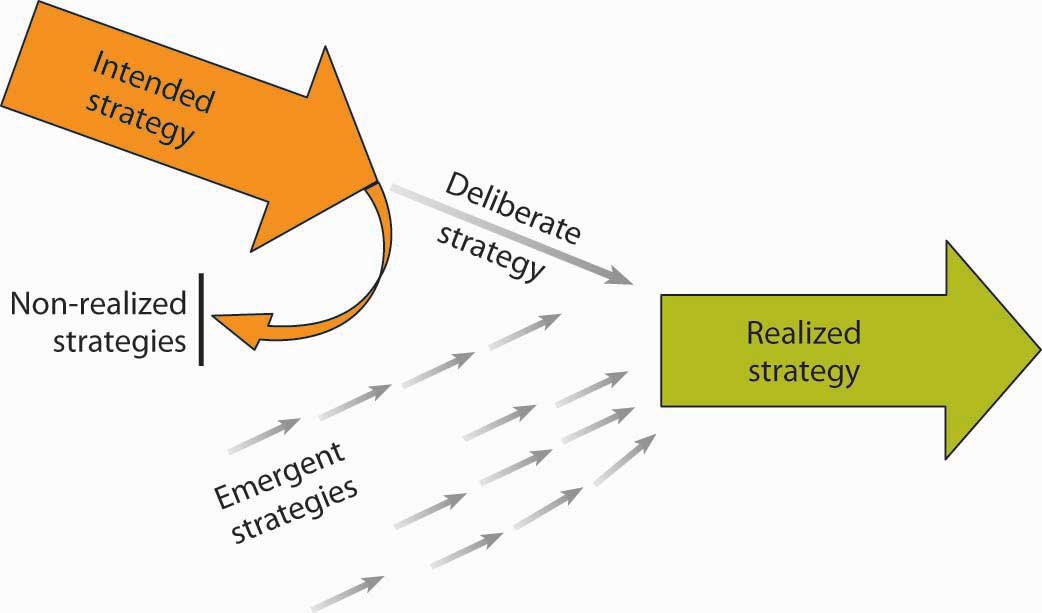
-          Encourages emergent strategies
-          Regular need for information
-          Management may become more conservative


Competitor analysis

Levels of competitors (according to Kotler)
                i . Brand competitors – (similar product, similar scale)
                ii . Industry competitors – (similar product, different scale)
                iii . Form competitors – (satisfy same needs, different products)
                iv . Generic competitors – (target same income, different products)


Gathering competitor intelligence
-          Identifying the current strategy
-          Identifying competitors objectives
-          Identifying competitors assumptions about the industry
-          Identify competitors resources and capabilities


Competitor response profiles (according to Kotler)
-          Laid-back competitor – (no response for competitive moves)
-          Selective competitor – (reacts only to some market threats)
-          Tiger competitor – (responds aggressively)
-          Stochastic competitor – (unpredictable responces)


National competitive advantage

 Porters Diamond

 
- Demand conditions ~ companies could gain economies of scale, gain experience, products maturity stage would be reached faster~ 
- Related and supporting industries
- Factor conditions ~ Basic factors, Advance factors 
- Firm structure , strategy and rivalry 
- Other events – Role of government, chance events
Clustering may help national competitive advantages. The deterioration of the porters diamond factors would cause the nations to lose their competitive advantages.

Criticisms of porters diamond 

- Cant explain why some countries have successful and unsuccessful companies in the same industry where the factors are same 
- Ignore multinational companies 
- Ignores the target country
- Less applicable to service sector


Information sources for environment analysis
                i . Primary sources
                ii . Secondary sources
                iii . Internet based sources


Tuesday, July 31, 2012

CIMA: EM: Strategic Management

The strategic management area of the EM syllabus seems quiet muddled up and seems to contain a lot of theories unrelated to each other. But when considering the whole topic strategic management has a nice and meaning full flow to its theories complementing each other. Having this topic area shortlisted as below helps to get the overall view of the topic and to know what areas should be known. 


Strategic Management

Rational approach to strategy development

Rational strategy process

1 . Mission and Objectives

Objectives must be SMART
Specific 
Measurable
Realistic
Timebound

Objectives should facilitate, (PRIME)   
Planing - objectives are a framework for planing
Responsibility - objectives are communicated to the relevant responsible manager/department
Integration - would help to gain goal congruence 
Motivation - could be used to motivate management to achieve objectives
Evaluation - senior management could evaluate performance using objectives as benchmarks

2 . Corporate Appraisal(SWOT analysis)

  i . Internal analysis - Internal resources would be categarised under,
                Threshold resources
                Threshold competencies
                unique resourses
                Core competencies 
            
           Porters Value Chain
                Primary activities
                    Inbound logistics
                    Operations
                    Outbound logistics
                    Marketing and sales
                    Service
                Secondary activities
                    Firm infrastructure
                    Human resource management
                    Technology development
                    Procurement
 ii . External analysis
            PESTEL framework
                Political
                Economic
                Social
                Technological
                Environmental
                Legal

            Porters five Forces
Rivalry amung existing firms
Threat of new entry
Substitute products
Bargaining power of buyers
Bargaining power of suppliers


Using the details from the internal analysis and the external analysis a SWOT analysis would take place

Strengths - internal analysis
Weaknesses - internal analysis
Opportunities - external analysis
Threats - external analysis

3 . Strategic option generation

4 . Strategy evaluation and choice

5 . Strategy implementation

6 . Review & control


Formal top-down strategy process

  • A separate designated team for strategy development
  • Formal collection of information for strategy generation
  • Decision making by the senior management team
  • A process for communicating and implementing the strategy
  • Regular review and control

Benifits of top-down strategy process

Avoids short-termist behaviour
Helps identify strategic issues
Goal congruence
Improves the stakeholders impreshion of the business
Provides a basis for strategic control

Drawbacks of top-down strategy process

Its too infrequent to let the buisness to be dynamic
Forbids radical and innovative action
Difficulties of implementation
Demotivation
Impossible in unsertain buisness environments
Not suitable for small businesses
                 Reasons for top-down strategy not suiting small business
                          - There is no goal congruence issues
                          - Limited choices in products and markets
                          - Limited resources
                          - The organisational structure


Achieving competitive advantage

1 . Positioning approach(outside-in)

Super normal profits by adjusting to the porters five forces.
Developing long term relations with stakeholders
   
Criticisms of positioning approach
        - Competitive advantage gaind by positioning approach is not sustainable
        - Environments change quickly(dynamic environments) making it impossible for the firm to adjust fast to implement an effective positioning approach
        - Changing the environment rather than changing the firm would be a better/easier alternative

2 . Resource based view(inside-out)   

Companies shold use its resources to out perform its rivals in,
        Speed
        Consistency
        Acuity
        Agility
        Innovativeness
The resources in the firm should be, (according to Barney)
         Valuable
        Rare
        Imperfectly imitable
        Not substitutable
Capabilities should arice from, (according to Kay)
        Competitive architecture
        Reputation
        Innovative ability
        Ownership of strategic assets
Core-competencies could be identified by, (according to Prahalad and Hamel)
        Must provide acces to a wide market
        Must provide significant contribution to costomer benifits
        Must be deficult for competitors to imitate

 Critisisms of resource based view
        - Conflicts with the positioning approach
        - Challenges the rational model of strategy
        - Resource based view can lead to different 
conclusions

Alternative strategy options

1 . Emergent Strategy 
2 . Logical incremental'ism (muddle through)